A strong commitment to the land and sea
Pacific Link takes marine and environmental safety seriously and will minimize impacts on the natural environment during construction and operations.
Canada enforces robust marine spill response and safety measures, including mandatory pilotage, tug escorts and restricted navigation zones, and this project will fully comply with these requirements. The project will incorporate marine protection systems, including real-time vessel tracking, double-hull tanker requirements and enhanced navigation protocols to safeguard coastal waters.
The project will develop safety and conservation measures and frameworks in partnership with Indigenous groups, port authorities and government. These efforts will be led by Trans Mountain Corporation, a Crown Corporation on behalf of Pacific Link. Trans Mountain brings decades of experience in facilitating safe, environmentally responsible operations on land and in marine environments.
The project will comply with - and plans to build on - Canada's existing, tested, rigorous safety and conservation frameworks, taking steps to protect the health and preservation of marine mammals, ocean health, species at risk, sensitive or at-risk habitats and migratory routes and species on land and in the air.
The Government of Canada recently announced a $1.2 billion investment to better protect Canada’s oceans and the life they sustain. The measures will increase monitoring, strengthen ocean science and ecosystems protections and improve marine incident prevention and preparedness.

Marine safety
Pacific Link will comply with Canada’s rigorous environmental regulations and strengthen spill prevention and marine protection.

Pipeline safety
Pipelines are the safest way to transport energy across Canada, and a range of safety features and processes will further improve issue detection and response.

Upstream emissions reduction
New technologies can capture and store CO2, a greenhouse gas, and prevent it from reaching the atmosphere.
Marine safety
Marine safety builds on the $3.5 billion Oceans Protection Plan.
Pacific Link will be designed, constructed and operated to comply with Canada’s rigorous environmental regulations to strengthen spill prevention and response, marine mammal protection, ecological stewardship and navigational safety.
The approach builds on the $3.5 billion Oceans Protection Plan and more than $150 million invested by Trans Mountain and shippers to double spill response capacity and drastically reduce response times for all vessels operating along British Columbia's south coast shipping corridor.
Incident prevention
The marine facility will support a range of prevention and mitigation programs, including:
- Pollution pre-screening and spill protocol adherence for vessels entering the terminal
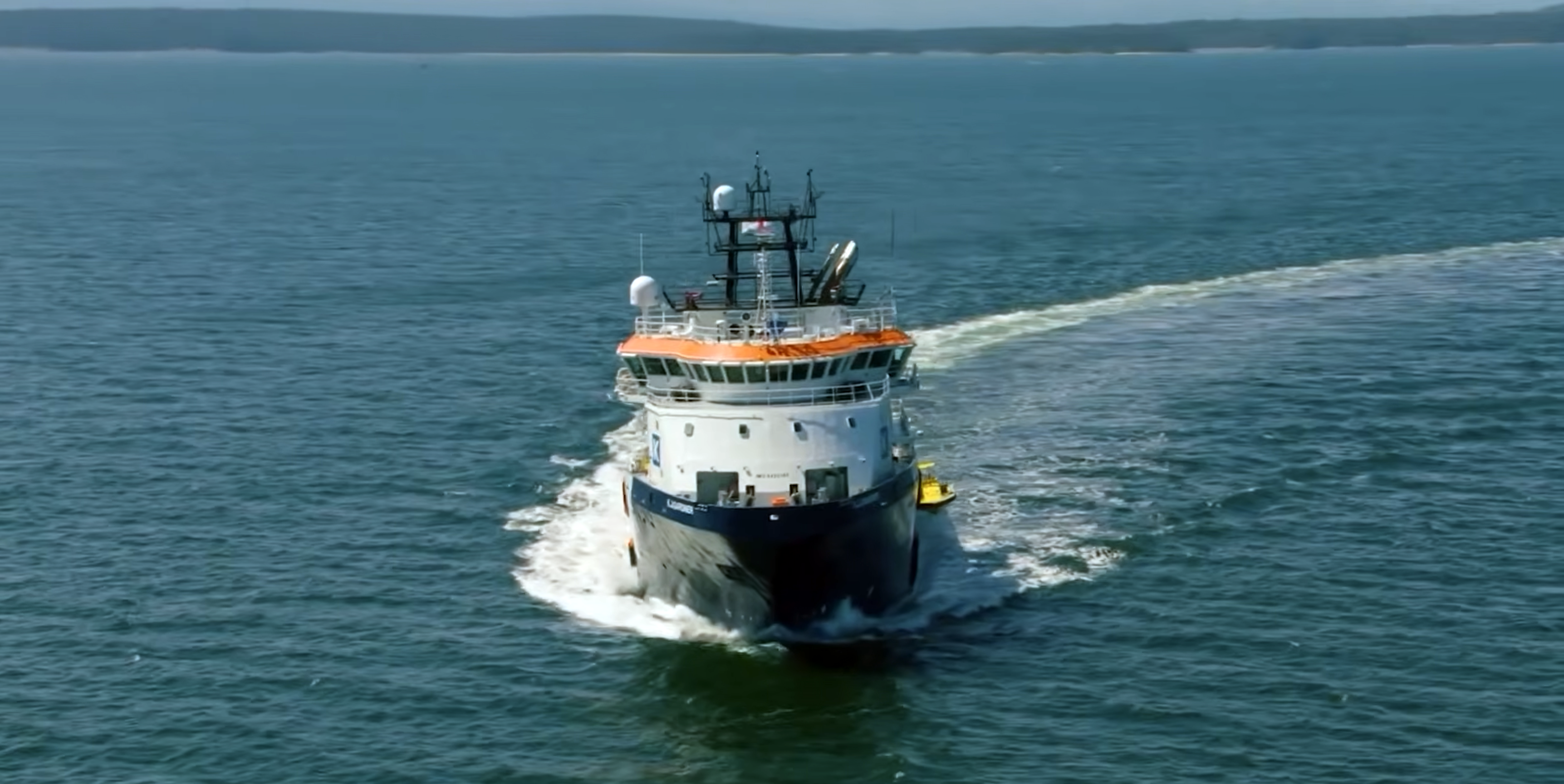
- Enhanced risk controls, including extended tug escorts for tankers
- Real-time visibility into marine activity and environmental conditions for Indigenous groups and coastal communities
- Impact mitigation for marine mammals, species at risk, salmon, marine birds and other marine life
- Protocols to minimize disruptive underwater noise that can disturb marine mammals
Emergency response
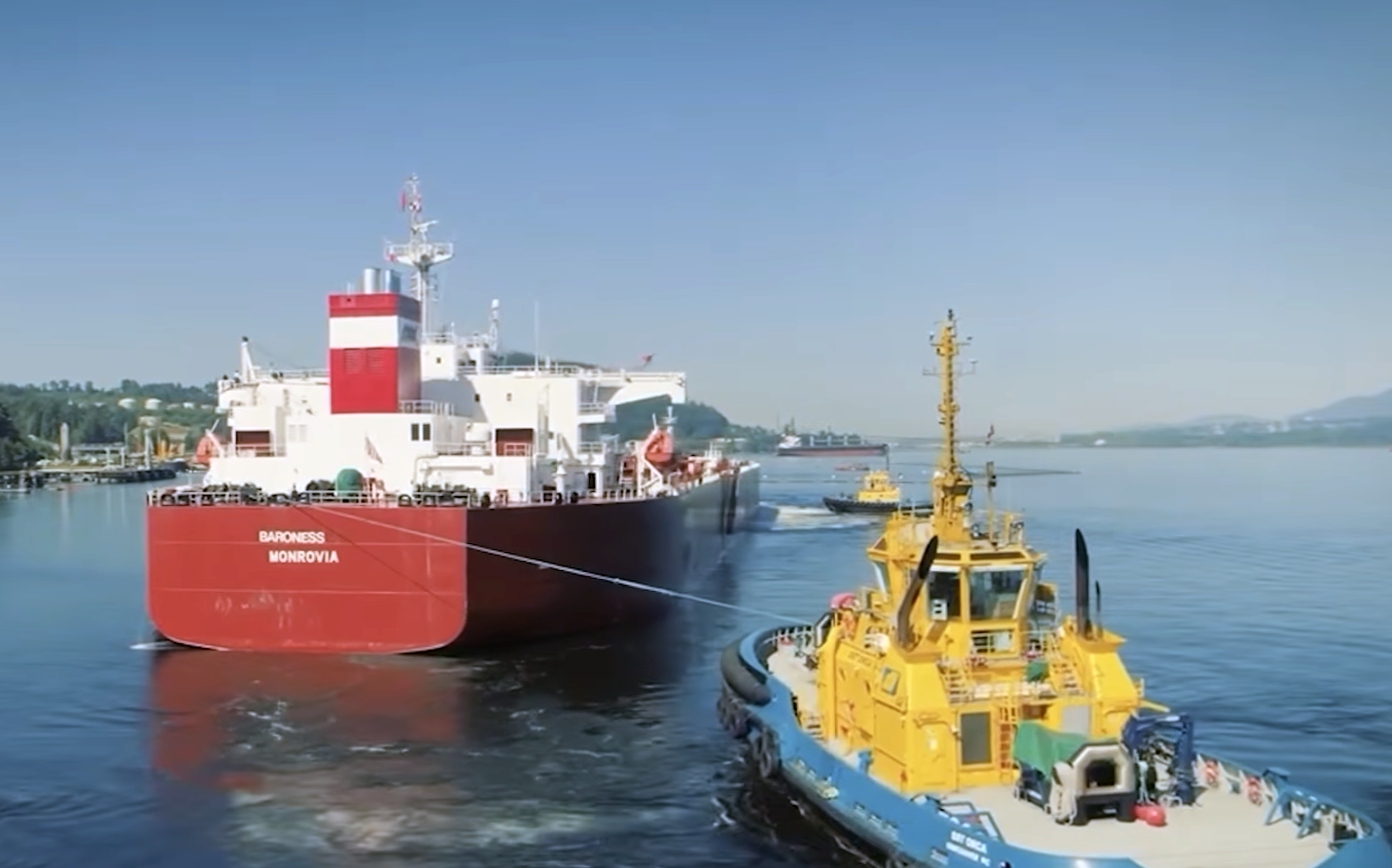
Pacific Link will leverage programs developed during the largest-ever expansion of spill response resources in Canada. The programs, developed for the Trans Mountain Expansion Project by the Western Canada Marine Response Corporation (WCMRC), the marine spill response organization for Canada's west coast, saw more than $150 million invested in new equipment, personnel and response bases in the Salish Sea.
Enhancements include recently constructed and upgraded WCMRC response bases, expanded personnel capacity and additional response equipment and vessels. These are designed to voluntarily meet a Tier 5 planning standard — the highest standard possible — for marine spill response. Collectively, these measures have strengthened preparedness, dramatically cutting response times and doubling on-water response readiness capability in comparison to mandatory requirements.
Indigenous participation
Pacific Link will engage Indigenous groups in emergency preparedness in several ways. In collaboration with Indigenous groups, the project will develop community-specific emergency response resources and guidelines that outline how parties will communicate in the event of an emergency.
Emergency preparedness planning will incorporate protocols to ensure Indigenous representatives are invited to observe or take part directly in exercises, train on response equipment and gain a first-hand look at how response plans are activated.
An Indigenous internship program may also provide opportunities for young Indigenous people to gain experience in marine spill response.

Pipeline safety
Pipelines remain the safest, most efficient and most reliable way to transport energy across Canada.
Each year, 99.999 per cent of crude oil transported via federally regulated pipelines reaches its destination safely, a fact that reflects decades of operational excellence and regulatory oversight. In fact, pipelines remain the safest, most efficient and most reliable way to transport energy across Canada.
Pacific Link will be designed to minimize environmental disruption along the up to 1,250-kilometre route by primarily following existing infrastructure. As the pipeline becomes operational, it will ensure safety through robust incident prevention, proactive issue detection and rapid emergency response.
Incident prevention
Pacific Link will use high-quality welding standards and pipe with corrosion protection, higher fracture toughness, a wall thickness ranging between 19 and 26 mm and full-length fibre-optic leak detection.
There will also be restrictions on excavation and other activity near the pipeline to reduce the potential for damage to the pipe and surrounding infrastructure. Damage prevention programs and operator safety and integrity management systems will also minimize incident risk.

Issue detection
A range of safety features, including leak detection systems, advanced fire detection and automated shutdown systems, will help to detect issues before they become problems. Issue monitoring and detection will happen continuously through control centres and automated systems, and operators will be able to monitor key operating conditions, such as pressure and flow, and act on anomalies that may indicate a problem.
Pipeline operators will also conduct above-ground surveillance and other forms of inspection on a regular basis. Pipelines are inspected internally using sophisticated in-line inspection technologies that can identify corrosion, cracks, deformation and other potential defects.

Emergency response
Pacific Link will leverage programs that currently govern emergency preparedness for the Trans Mountain Expansion Project. This provides a framework for developing and deploying emergency management plans, preparing trained response personnel, undertaking regular multi-agency response exercises and conducting procedures for isolating sections of pipeline and responding to releases.

Upstream emissions reduction
This multi-billion-dollar initiative would capture, transport and permanently store carbon dioxide emissions from oil sands facilities.
In addition to building and operating the pipeline to keep people and the natural world safe, the proposed Pathways Project is anticipated to reduce the long-term impact of emissions produced by increased production in the Alberta oil sands.
Canada’s Oil Sands Alliance proposed this multi-billion-dollar initiative to capture, transport and permanently store carbon dioxide emissions from oil sands facilities. The Pathways Project would be the world's largest carbon capture and storage infrastructure project, with the potential to make Alberta oil among the lowest-carbon-intensity barrels produced in the world while enabling Canada to stay competitive in the global marketplace. The initiative consists of a 650-kilometre CO₂ pipeline network that is estimated to transport millions of tonnes of compressed CO₂ from oil sands production sites to a storage facility in the Cold Lake region of Alberta.
Alberta’s government, the federal government and the Oil Sands Alliance have signed a trilateral memorandum of understanding to advance the Pathways Project, with a shared objective to achieve 16 million tonnes of net emissions reductions per year by 2045.
Pacific Link is contingent on Pathways moving forward to ensure additional emissions generated through production can be managed responsibly.